Point defects are the simplest and most common type of crystal defects found in crystalline solids. They arise when one or a few atoms, ions or molecules deviate from their ideal lattice positions. Since the disturbance is confined to only one or a few lattice sites, these defects are called point defects. Point defects play an important role in determining the physical, electrical, optical and diffusion properties of crystalline materials.
Definition
A point defect is a localized imperfection in a crystal lattice involving one or a few lattice points. It is produced due to the absence, displacement or replacement of atoms or ions at their normal lattice positions.
Formation of Point Defects
Point defects may be formed naturally during crystal growth or may be introduced by external factors. Even highly purified crystals contain a small number of point defects because they are thermodynamically unavoidable at temperatures above absolute zero.
Causes of Point Defects
- High temperature during crystal growth.
- Rapid cooling of molten materials.
- Presence of impurities.
- Mechanical deformation.
- Exposure to X-rays, γ-rays or neutron irradiation.
- Diffusion of atoms or ions within the crystal.
Characteristics of Point Defects
- They involve only one or a few lattice sites.
- They do not destroy the overall crystal structure.
- They influence the physical properties of solids.
- They increase atomic and ionic diffusion.
- Their concentration generally increases with temperature.
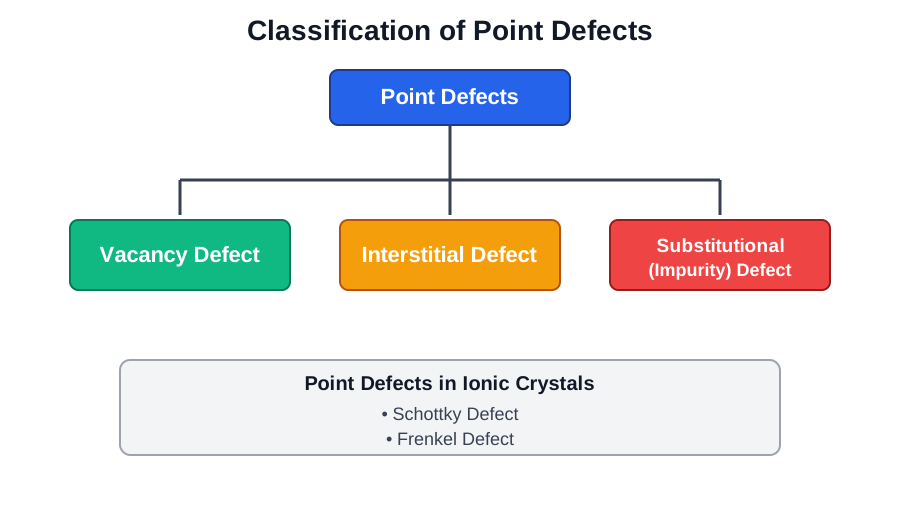
Classification of Point Defects
Point defects are broadly classified into three major categories.
- Vacancy defects
- Interstitial defects
- Substitutional (Impurity) defects
In ionic crystals, point defects also include Schottky defects, Frenkel defects and colour centres, which are discussed separately in the following sections.
Vacancy Defect
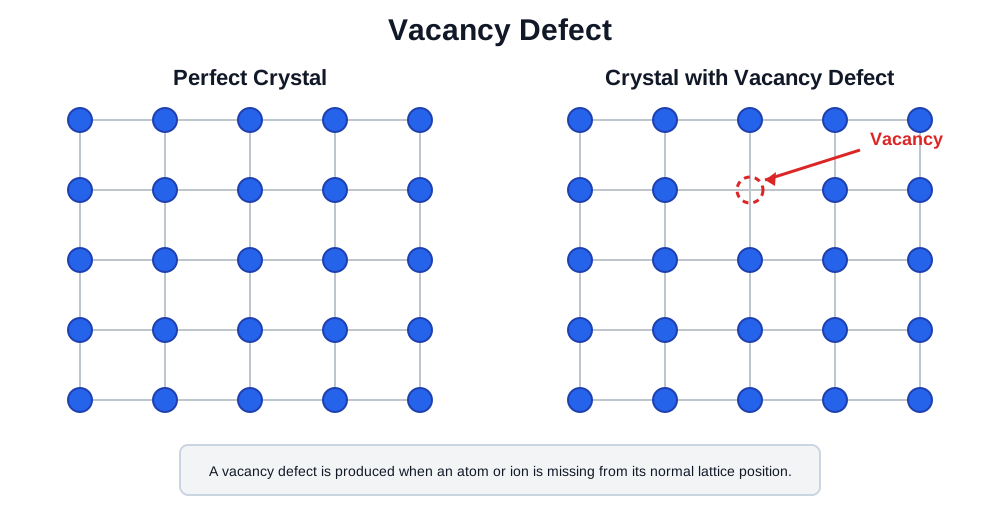
A vacancy defect is produced when an atom or ion is missing from its normal lattice position. The vacant lattice site is known as a vacancy. Vacancy defects are commonly observed in metals and ionic crystals at elevated temperatures.
Interstitial Defect
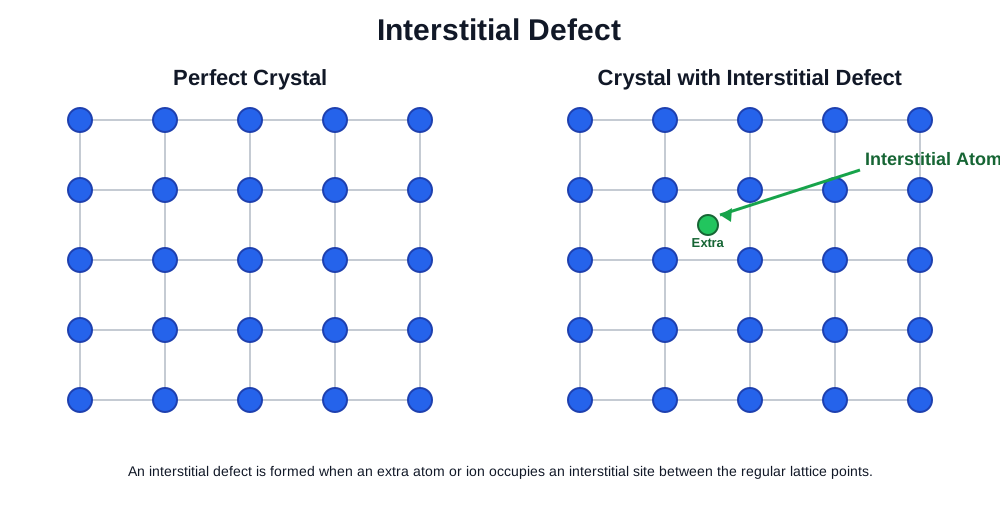
An interstitial defect is formed when an extra atom or ion occupies an interstitial site, which is normally unoccupied in the crystal lattice. Interstitial atoms distort the surrounding lattice because of the limited space available between regular lattice positions.
Substitutional (Impurity) Defect
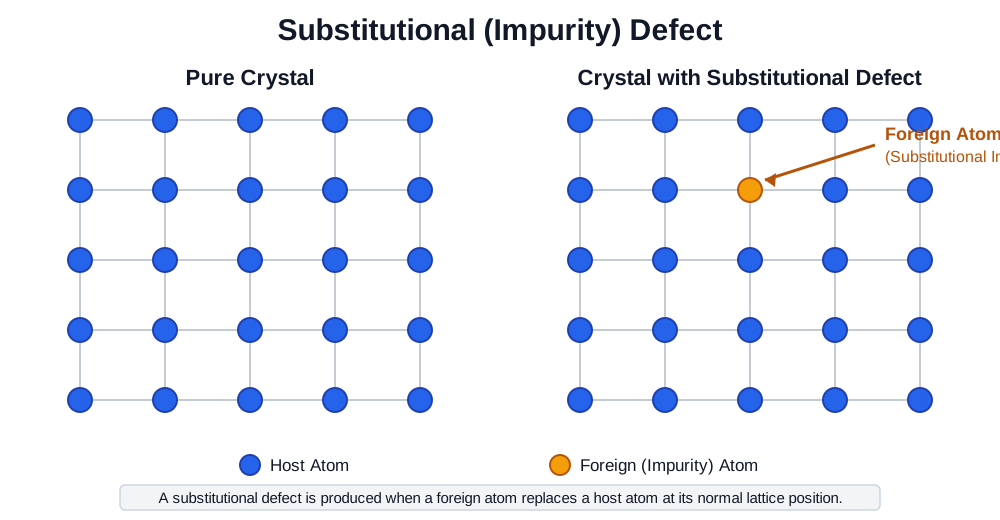
A substitutional defect occurs when a foreign atom or ion replaces a host atom or ion at its normal lattice position. Such defects are intentionally introduced in semiconductors during the doping process to modify their electrical properties.
Effects of Point Defects
Although point defects disturb the regular arrangement of atoms in a crystal, they are extremely useful because they modify many important material properties.
- Increase atomic and ionic diffusion.
- Alter electrical conductivity.
- Modify optical properties.
- Influence mechanical strength and hardness.
- Control semiconductor behaviour.
- Improve catalytic activity.
Importance of Point Defects
The study of point defects is essential in solid-state chemistry because many technological applications depend upon controlled defect formation. Modern electronic devices, lasers, batteries, fuel cells and semiconductor components all rely on carefully engineered crystal defects.
- Semiconductor manufacturing.
- Solid electrolyte preparation.
- Ceramic engineering.
- Superconducting materials.
- Magnetic materials.
- Nanotechnology.
Summary
Point defects are localized imperfections involving one or a few lattice sites in a crystal. They are classified into vacancy, interstitial and substitutional defects. In ionic crystals, Schottky defects, Frenkel defects and colour centres are also important point defects. These defects strongly influence diffusion, electrical conductivity, optical behaviour and mechanical properties, making them highly significant in materials science and solid-state chemistry.
Key Points
- Point defects involve one or a few lattice sites.
- They are the simplest crystal defects.
- They may be intrinsic or produced by impurities.
- Their concentration increases with temperature.
- They control many physical and electrical properties of solids.
- Point defects are essential for modern semiconductor technology.