A glass thermometer is a temperature-measuring instrument in which temperature is determined from the change in volume of a thermometric liquid contained inside a glass bulb and capillary tube. It is one of the simplest and oldest methods of temperature measurement and is based on the thermal expansion of a liquid.
Principle
When a thermometric liquid is heated, its volume increases. The liquid is contained in a bulb connected to a very narrow capillary tube. Because the capillary has a small cross-sectional area, even a small change in the volume of the liquid produces a comparatively large change in the height of the liquid column. The height of the liquid column is calibrated in terms of temperature.
\[\Delta V = \gamma V_0 \Delta T\]
where \(\Delta V\) is the change in volume, \(\gamma\) is the coefficient of cubical expansion of the liquid, \(V_0\) is the initial volume, and \(\Delta T\) is the change in temperature.
Construction of Glass Thermometer
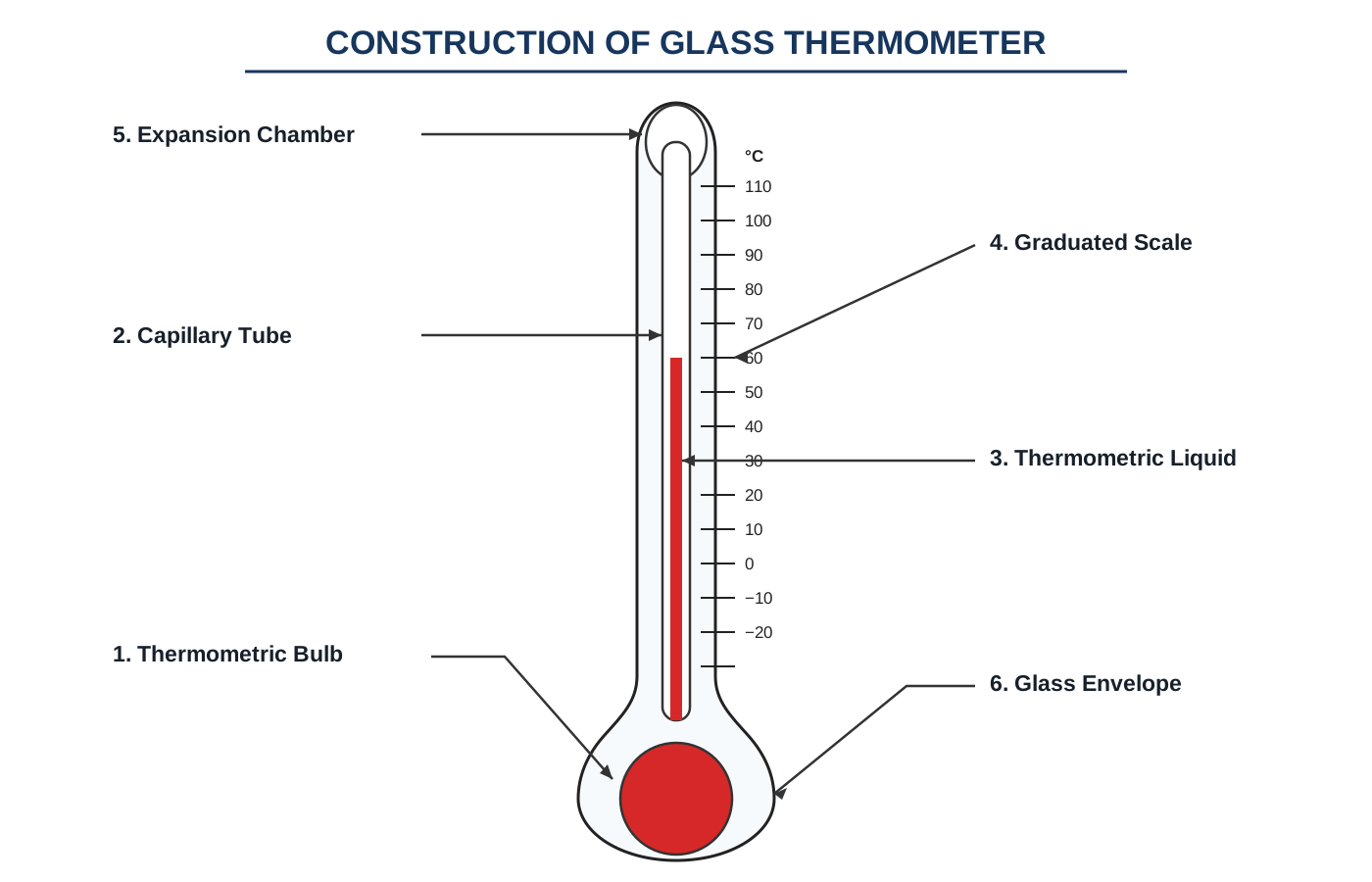
A glass thermometer consists of a glass bulb connected to a fine capillary tube and provided with a calibrated temperature scale. The bulb contains a thermometric liquid that expands or contracts with change in temperature. The main parts of a glass thermometer are the thermometric bulb, capillary tube, thermometric liquid, graduated scale, and expansion chamber.
1. Thermometric Bulb
The thermometric bulb is the lower enlarged portion of the thermometer and contains the thermometric liquid. It is the temperature-sensitive part of the instrument and is brought into thermal contact with the substance whose temperature is to be measured. The bulb is made of suitable glass that can withstand the required temperature range.
2. Capillary Tube
The bulb is connected to a very narrow and uniform bore called the capillary tube. When the thermometric liquid expands or contracts, the change in volume produces a noticeable movement of the liquid column inside the narrow capillary. The small bore of the capillary increases the sensitivity of the thermometer.
3. Thermometric Liquid
The bulb and a portion of the capillary tube are filled with a thermometric liquid. Mercury and coloured organic liquids such as alcohol are commonly used. The liquid should have a predictable and sufficiently large change in volume with temperature so that the temperature can be measured accurately.
4. Graduated Scale
A graduated temperature scale is provided alongside the capillary tube. The position of the liquid column is compared with this scale to determine the temperature. The scale is calibrated using fixed temperature points and is generally marked in degrees Celsius or another suitable temperature scale.
5. Expansion Chamber
An expansion chamber may be provided at the upper end of the capillary tube. It provides additional space for the thermometric liquid when the temperature rises beyond the normal measuring range. This helps prevent excessive pressure and possible breakage of the thermometer.
6. Glass Envelope
The bulb and capillary tube are enclosed within or formed from suitable glass. The glass provides mechanical support and separates the thermometric liquid from the surrounding medium. The glass must have suitable thermal and mechanical properties for the intended temperature range.
Arrangement of the Main Parts
The basic arrangement can be represented as: thermometric bulb → capillary tube → graduated scale, with the thermometric liquid occupying the bulb and extending into the capillary tube. When the temperature changes, the liquid expands or contracts and its level moves along the calibrated scale.
Working
When the bulb of the thermometer is brought into contact with a substance whose temperature is to be measured, heat is transferred between the substance and the thermometer. The thermometric liquid expands or contracts according to the temperature. This change in volume causes the liquid column to move through the narrow capillary. The position of the liquid column is then compared with the calibrated scale to determine the temperature.
Temperature change → Volume change of liquid → Movement of liquid column → Temperature reading
Requirements of a Good Thermometric Liquid
A suitable thermometric liquid should have a large and reasonably uniform coefficient of expansion so that a small temperature change produces an easily measurable change in volume. It should have a wide liquid-temperature range, should not wet the glass, should be easily visible, and should have good thermal conductivity so that it quickly attains the temperature of the substance being measured.
Thermometric Liquids
The commonly used thermometric liquids are mercury and coloured organic liquids such as alcohol. The choice of liquid depends mainly on the temperature range and the application.
Types of Glass Thermometers
Glass thermometers can be classified according to the thermometric liquid used and according to their construction or application. The important types include mercury thermometers, alcohol thermometers, maximum thermometers, minimum thermometers, maximum-minimum thermometers, and clinical thermometers.
1. Mercury Thermometer
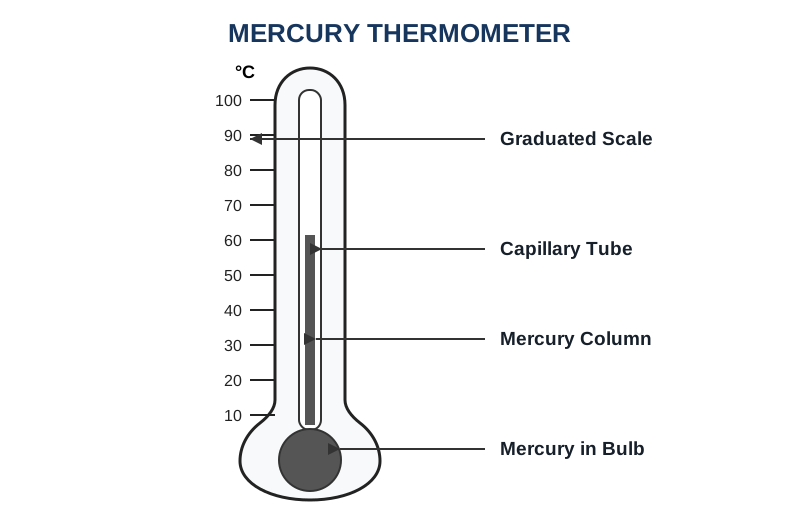
A mercury thermometer uses mercury as the thermometric liquid. Mercury has a fairly uniform coefficient of expansion, does not significantly wet ordinary glass, is easily visible, and has good thermal conductivity. It is therefore suitable for many ordinary and laboratory temperature measurements.
2. Alcohol Thermometer
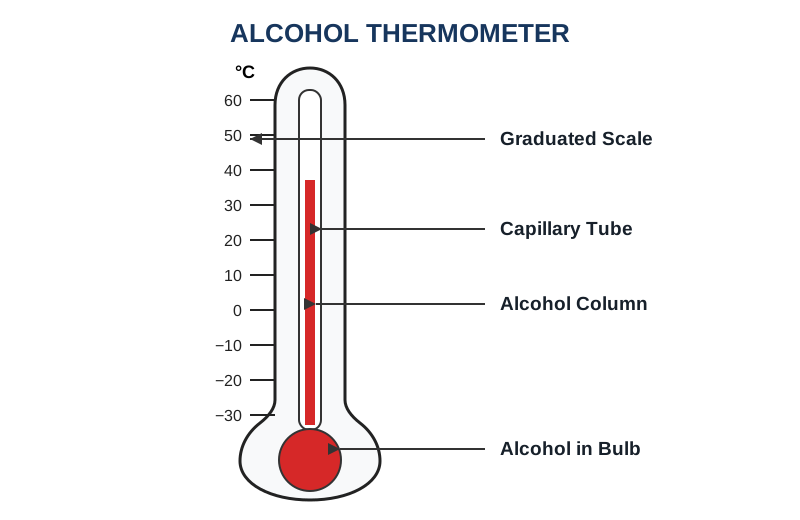
An alcohol thermometer uses alcohol, usually coloured to make the liquid column easily visible. Alcohol thermometers are particularly useful for measuring low temperatures because alcohol has a much lower freezing point than mercury. However, alcohol has a relatively low boiling point and wets glass, which limits its use at high temperatures.
3. Maximum Thermometer
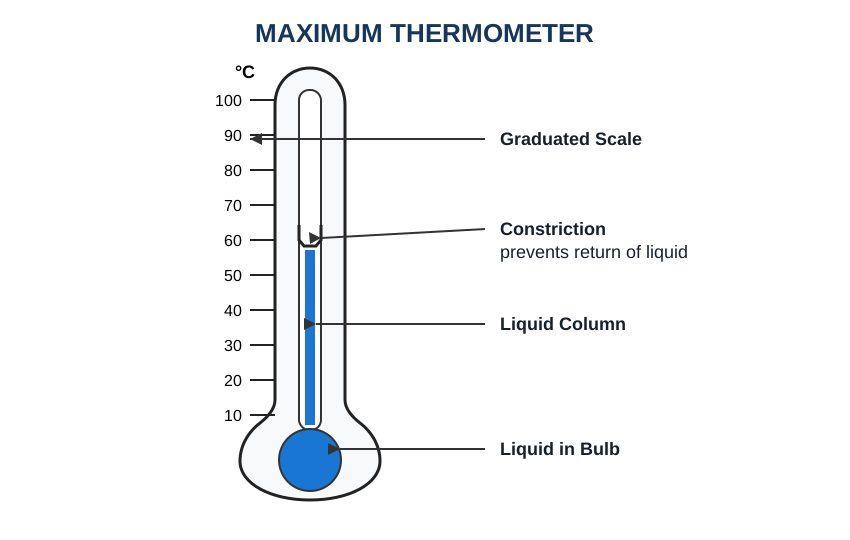
A maximum thermometer is designed to record the highest temperature reached during a particular period. A constriction is provided in the capillary near the bulb. When the temperature increases, the thermometric liquid passes through the constriction. When the temperature decreases, the liquid cannot easily return through the constriction, so the maximum temperature reached remains indicated until the thermometer is reset.
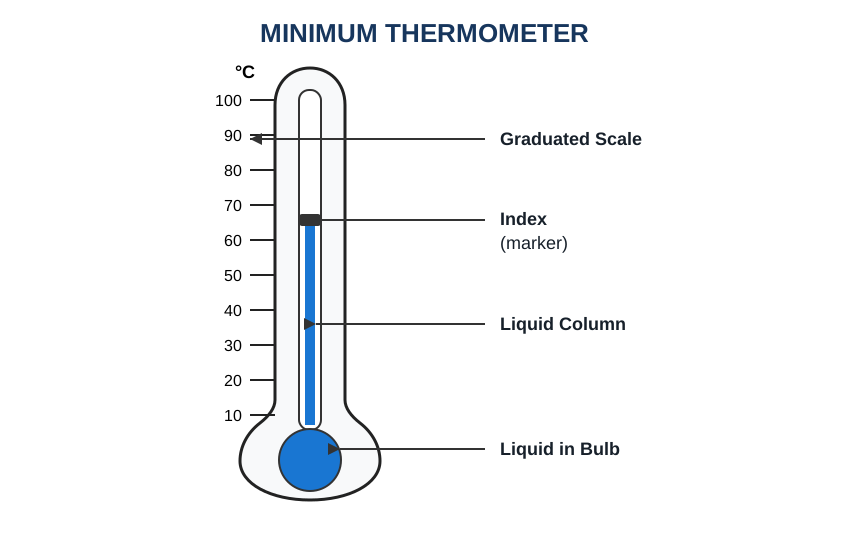
4. Minimum Thermometer
A minimum thermometer records the lowest temperature reached during a particular period. It generally uses a small index inside the liquid column. When the temperature falls, the liquid moves and carries the index with it. When the temperature rises again, the liquid moves back while the index remains at the position corresponding to the lowest temperature reached.
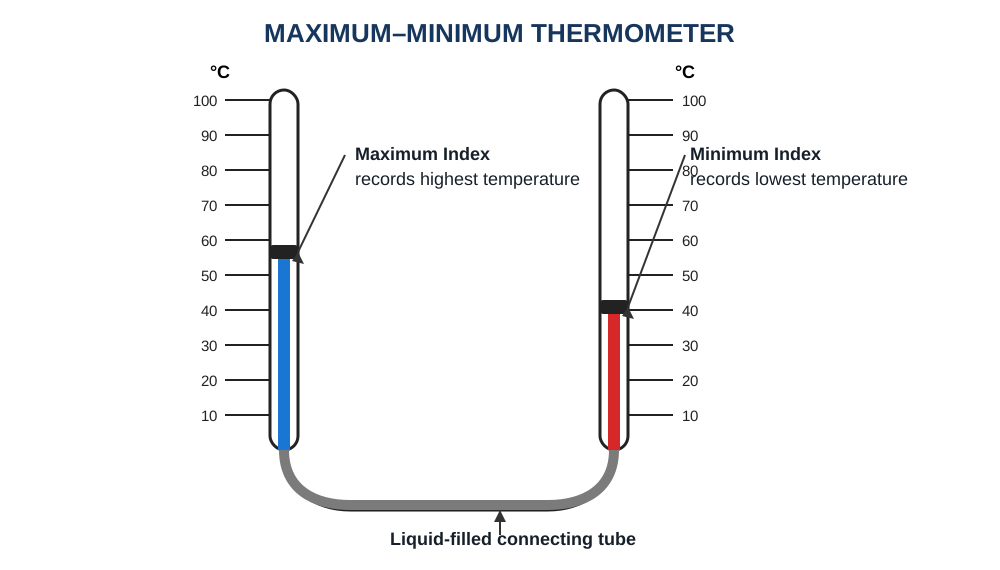
5. Maximum-Minimum Thermometer
A maximum-minimum thermometer is designed to record both the highest and lowest temperatures reached during a specified period. It contains suitable indicating mechanisms that retain the maximum and minimum positions until the instrument is reset.
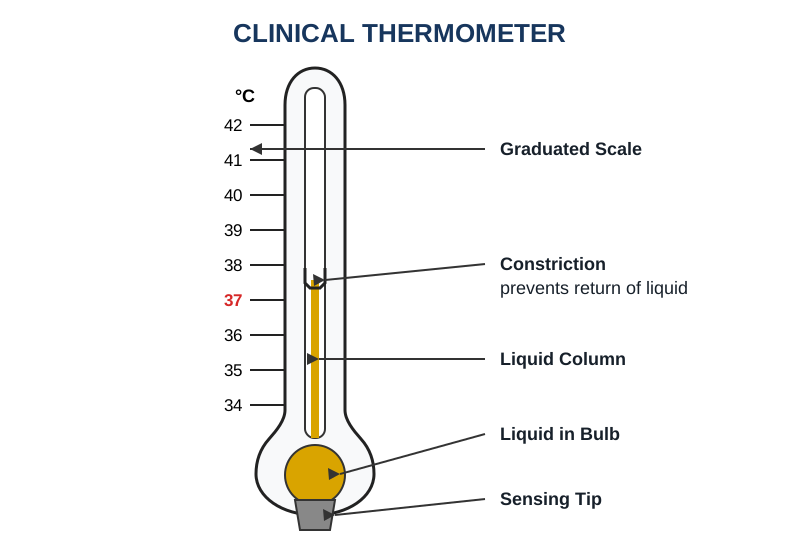
6. Clinical Thermometer
A clinical thermometer is specially designed for measuring the temperature of the human body. It normally has a narrow temperature range around normal body temperature and incorporates a constriction in the capillary so that the temperature reading can be retained after the thermometer is removed from the body.
Advantages of Glass Thermometers
- Simple construction.
- Easy to operate.
- No external power supply is required.
- Relatively inexpensive.
- Suitable for direct temperature measurement.
- Can provide good accuracy when properly calibrated and used.
Limitations of Glass Thermometers
- Glass is fragile and can break easily.
- Reading generally has to be made manually.
- They are not convenient for automatic process control.
- Response may be relatively slow.
- The usable temperature range depends on the thermometric liquid.
- Mercury thermometers present a toxicity concern if broken.